
Best Time to Prune Trees in Minnesota (And When to Avoid)
Discover the best seasons for tree pruning in Minnesota. Learn why winter is best for most trees, plus species-specific exceptions and disease risks to avoid.

4.7 OUT OF 5 STARS
Trusted by homeowners
across the twin cities
Pruning at the wrong time of year can do more than slow your tree’s recovery. It can increase the risk of serious diseases, attract destructive insects, and even shorten the life of certain Minnesota trees. This is especially important for homeowners in the Twin Cities West Metro and Lake Minnetonka communities, where certain diseases pose year-round risks.
While winter is the safest pruning season for most trees, there are important exceptions. Knowing when to prune and when to wait helps protect your investment and keeps your trees healthier for years to come.
Key Takeaways
- Winter dormancy (late November through March) is ideal for most trees, but species and disease risk can change the timing.
- Oak wilt and Dutch elm disease create restricted windows when pruning is dangerous; oak pruning must stop from April through July.
- Bleeding trees need dormant cuts (January through February) or post-dormant cuts (June through July) to avoid heavy sap flow.
- Summer and fall pruning stresses trees and can significantly delay healing.
- When uncertain about timing or safety, a Certified Arborist can assess your specific trees and recommend the right window.
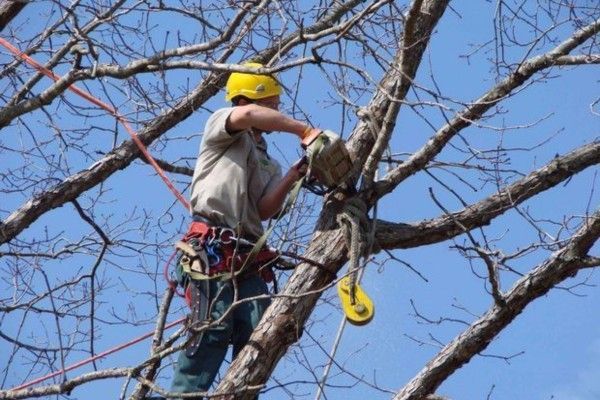
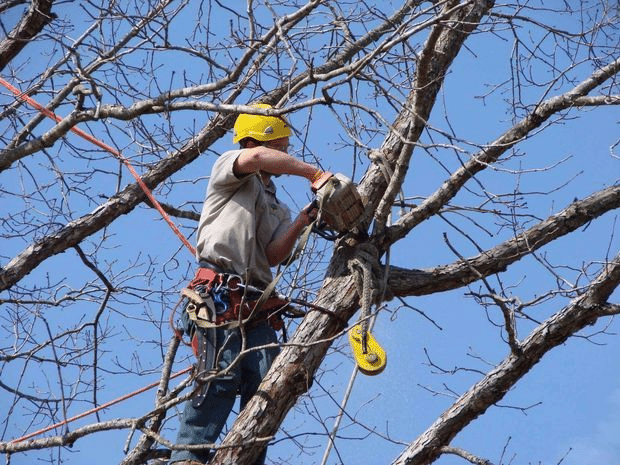
Large tree pruning requires specialized climbing equipment, proper cutting techniques, and knowledge of species-specific pruning practices.
When Is the Best Time to Prune Most Minnesota Trees?
While late November through early March is generally safe for pruning most shade trees in Minnesota, late February through early March is optimal.
Why Winter Dormancy Is Best
During dormancy, trees prioritize wound healing over new growth because they’ve halted energy-demanding activities. Your cuts heal faster and stronger than they would during the active growing season. Sap flow is minimal, and insect and disease pressure are essentially zero during cold months, allowing the tree to focus entirely on sealing wounds instead of competing demands.
Better Visibility for Better Cuts
Without foliage in the way, an arborist can identify structural problems with precision. Narrow branch angles that will fail under heavy snow, weak unions where branches meet the trunk, competing leaders fighting for dominance, hidden deadwood in the crown, and crossing branches rubbing together all become visible. These defects are nearly impossible to spot when the canopy is full.
Why Arborists Prefer Late Winter Pruning
While pruning can be done safely throughout winter dormancy, many arborists in Minnesota prefer late February through early March. Trees remain dormant, temperatures are becoming more moderate, and spring growth is close enough that the tree can begin compartmentalizing pruning wounds soon after the cuts are made.
Which Tree Diseases Change When You Should Prune?
Three diseases dominate Minnesota landscapes and create specific windows when pruning becomes risky. Understanding your tree’s disease risk transforms pruning timing from guesswork into smart, preventive care.
Avoid Pruning Oaks During Oak Wilt Season (April–July)
Oak wilt is one of the most destructive tree diseases in Minnesota. During spring and summer, sap beetles are attracted to fresh pruning wounds and can carry the oak wilt fungus from infected trees to healthy ones. Even a single pruning cut during this period can create an opportunity for infection.
Follow these pruning windows:
- Safe to Prune: November 1 through March 31
- Avoid Pruning (opens in new tab) : April 1 through July 31
Red oaks are especially vulnerable and can decline within weeks of becoming infected. White oaks typically progress more slowly but are still at risk. Because oak wilt is established across much of the Twin Cities metro and surrounding counties, timing your pruning correctly is one of the simplest and most effective ways to protect your trees.
Prune Elms Only During Dormancy to Reduce Dutch Elm Disease Risk
Elm bark beetles transmit Dutch elm disease during warm months. The fungus clogs the elm’s water-conducting vessels, creating sudden wilting of branches, brown or yellowing leaves, and “flagging” (scattered dead branches mixed with healthy ones).
Progression often happens rapidly over one growing season. Minneapolis has lost tens of thousands of elms over decades due to this disease(opens in new tab), making prevention essential for anyone with mature elms on their property.
Plan elm pruning around beetle activity:
- Safe to Prune: November through March
- Avoid Pruning: April through August, when elm bark beetles are most active
Dormant-season pruning greatly reduces the risk of attracting beetles to fresh wounds and is the recommended timing for routine maintenance.
Prune Ash Trees During Dormancy If Emerald Ash Borer Is Present
Emerald ash borer larvae tunnel into ash wood, killing the tree within three to five years of infestation. The borer is present in 60 Minnesota counties(opens in new tab)and is responsible for the death and decline of tens of millions of ash trees across North America(opens in new tab). If you have ash trees, disease monitoring and management planning are critical.
Pruning windows for ash trees:
- Safe to Prune: November through March
- Avoid Pruning: May through September
Protecting ash trees requires more than proper pruning. A Certified Arborist can monitor for emerald ash borer, recommend treatment(opens in new tab) when appropriate, and help determine whether a tree can be preserved.
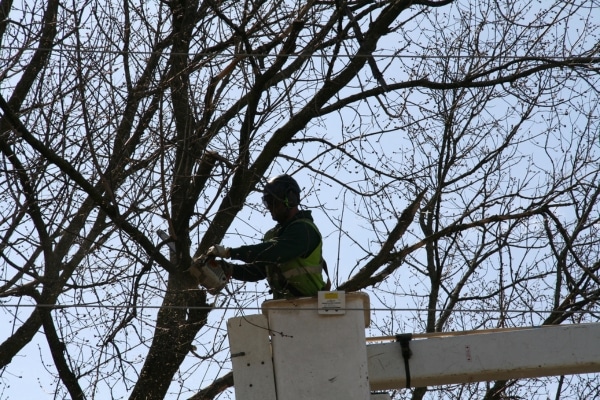
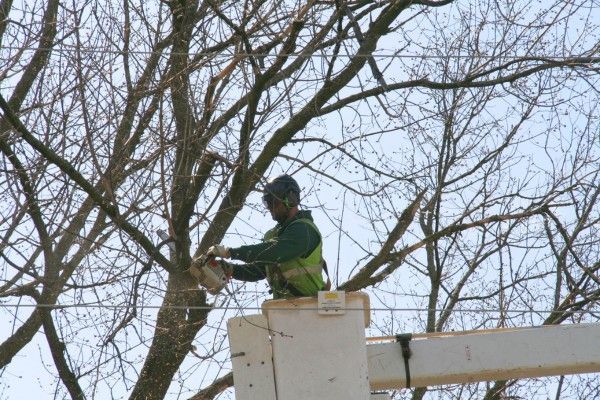
When trees are too tall to prune safely from the ground, trained arborists use aerial lifts to perform precise, controlled pruning.
Which Tree Species Need Different Pruning Timing?
Not all trees follow the winter-is-best rule. Some species have distinct seasonal needs based on their physiology or flowering patterns. Knowing your tree’s type prevents costly mistakes and ensures better results.
Bleeding Trees (Prune January Through February or June Through July)
Sugar maples, red maples, silver maples, birch, and walnut all “bleed,” or leak sap, heavily in spring. Sap flows from late February through May if pruned during this window.
To avoid the sap flow:
- Prune in the coldest part of winter (January through early February)
- Alternatively, wait until June through July after sap activity stops
If you prune outside these recommended windows, expect heavy sap flow. While it won’t harm the tree, it can be unsightly and attract insects until the wound seals.
Spring-Blooming Flowering Trees (Prune Immediately After Bloom)
Lilacs, crabapples, dogwoods, forsythias, and rhododendrons set next year’s flower buds on old wood during summer. Prune immediately after bloom ends to preserve next year’s display. Late winter or early spring pruning removes this year’s flowers.
Evergreens (Species-Dependent Timing)
Evergreens have different needs than deciduous trees because their growth patterns are unique.
Spruce and Pine:
- Prune after new spring growth emerges
- Ideal window is late March through June
- Timing allows the tree to set growth for the season
Juniper, Yew, and Boxwood:
- Prune just before or after spring growth
- Ideal window is late March through mid-May
- Avoid fall pruning entirely; new soft growth won’t harden off before winter, leaving the tree vulnerable to frost damage
Why Is Summer and Fall Pruning Riskier Than Winter?
Summer and fall pruning can place additional stress on trees at the wrong time of year. Knowing the risks helps you make better pruning decisions.
Summer Pruning Competes with Active Growth
During summer, trees are focused on producing leaves and storing energy. Pruning forces them to divide resources between supporting new growth and compartmentalizing fresh wounds, slowing recovery. Summer pruning is sometimes necessary to remove dead, damaged, or hazardous branches, but it should generally be limited to those situations.
Fall Pruning Triggers Vulnerable New Growth
As trees prepare for winter, growth slows to store energy. Pruning during this transition can stimulate tender new growth that won’t have time to mature before freezing temperatures arrive. The result is increased stress and a greater risk of winter damage.
Is It Ever Okay to Prune Outside the Dormant Season?
Yes. Dormant-season pruning is recommended for most routine maintenance, but some situations shouldn’t wait. Removing a hazardous branch promptly is often the safest choice, regardless of the time of year.
Prune immediately if a branch is:
- Dead or broken
- Diseased, decaying, or heavily infested with pests
- Damaged after a storm
- Hanging over a home, driveway, sidewalk, or power line
- At immediate risk of failing and causing injury or property damage
When pruning outside the dormant season is necessary, proper timing and technique become even more important to minimize stress and reduce the risk of pest or disease problems. A certified arborist can determine the safest approach based on the tree species, the season, and the tree’s overall condition.
When to Call a Professional Arborist
Trying to prune your own trees, especially large ones or those near structures, carries real risks to you and the tree. Improper cuts, unsafe climbing, and mistimed pruning create long-term health problems that compound over years.
Call a Certified Arborist if any of these situations apply to your trees:
- Branches hang over your roof, garage, or power lines
- Trees are over 20 feet tall
- Branches require climbing or specialized equipment to reach safely
- You’re uncertain about what to remove or when to prune
- Large trees show signs of disease or structural stress
- You want expert guidance on disease prevention and timing
How Professional Arborists Help
Professional arborists bring expertise that makes a real difference in outcomes, including:
- Knowledge of your tree’s specific species and disease risks
- Proper cutting technique that helps wounds heal faster and stronger
- Professional equipment and training that minimize property damage
- Ability to diagnose hidden problems like disease or structural weakness before they become catastrophic
- Understanding of Minnesota’s specific disease windows and timing requirements
Frequently Asked Questions About Tree Pruning
How often should mature trees be pruned?
Mature shade trees benefit from pruning every three to five years. Younger trees under ten years may need pruning every one to two years during establishment.
What’s the difference between pruning and trimming?
Pruning removes branches to improve tree health and structure. Trimming cuts back outer growth for aesthetics and clearance. Most residential work combines both.
Can I prune right after a hard frost?
Wait a few weeks after hard frost to observe the damage. Frost-injured branches may appear dead but often recover once temperatures warm. Pruning too quickly removes branches that would survive.
Should I seal pruning wounds?
Wound dressing isn’t always necessary for healthy trees, but if applied, use it only on summer or fall cuts to prevent disease entry. Never seal wounds in winter.
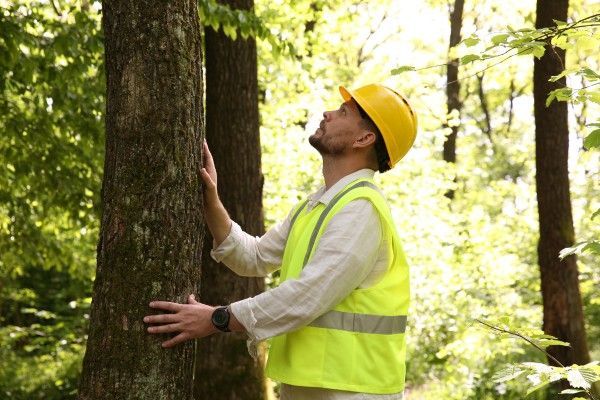
Before making any cuts, a certified arborist evaluates the tree’s species, health, structure, and disease risk to determine the best time to prune.
Take the Guesswork Out of Tree Pruning—Call Ostvig Tree Care
Knowing when to prune is just as important as knowing how to prune. While most Minnesota trees benefit from dormant-season pruning, factors like tree species, disease risk, and overall health can change the right approach.
Whether you’re planning routine maintenance, concerned about oak wilt or Dutch elm disease, or simply want to ensure your trees are pruned at the right time, Ostvig Tree Care can help. Our ISA Certified Arborists provide expert pruning recommendations for homeowners throughout Wayzata, Excelsior, Orono, the Twin Cities West Metro, and the Lake Minnetonka area. Request an estimate(opens in new tab) or call 763-251-9233 to schedule your pruning assessment.
Categories

Jim Ostvig
Few people know Minnesota trees like Jim Ostvig. As an ISA Certified Arborist and former owner of Ostvig Tree Care, he has built a career around providing practical, science-based recommendations that put the long-term health of trees first.
Related Posts
Jim Ostvig | August 14, 2026 | Tree Care Tips
Plant Health Care Programs: What’s Included & Why You Should Enroll
Plant health care keeps trees healthy for years. Discover what's included in a PHC program, why they save money compared to removal, and how to get started.
Jim Ostvig | August 14, 2026 | Tree Pests and Diseases
Oak Wilt Prevention: Minnesota’s Year-Round Seasonal Guide
Worried about oak wilt? Learn when it spreads, how to recognize symptoms, and the best times to prune, treat, and protect Lake Minnetonka oak trees.
Jim Ostvig | December 6, 2025 | Blog, Tree Care, Tree Disease and Pests
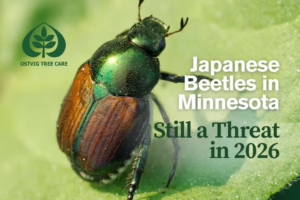
Japanese Beetles in Minnesota: Still a Threat in 2026
If you live in the Twin Cities, you’ve likely seen them—shiny green-and-copper beetles munching away on leaves in mid-summer. These are Japanese beetles, and while they’ve been in Minnesota for decades, they’re still one of the most damaging pests to trees, shrubs, and lawns.
Have a Question We Haven't Covered?
Our ISA Certified Arborists are always happy to help. Reach out for a free consultation, or explore more articles in the Learning Center.