
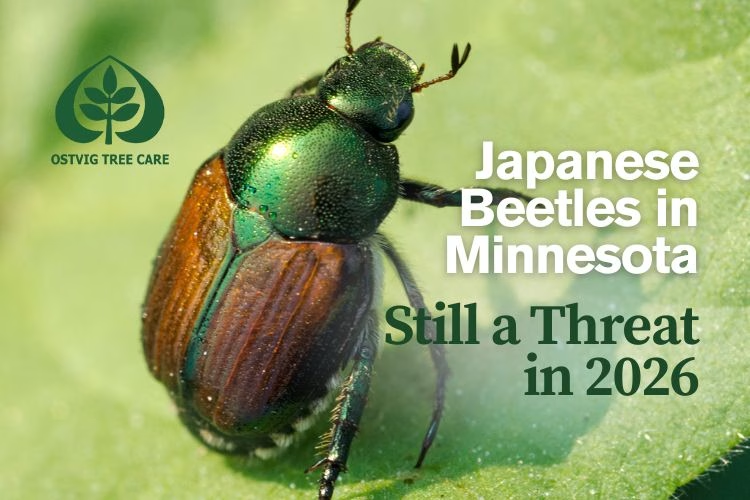
Japanese Beetles in Minnesota: Still a Threat in 2026
If you live in the Twin Cities, you’ve likely seen them—shiny green-and-copper beetles munching away on leaves in mid-summer. These are Japanese beetles, and while they’ve been in Minnesota for decades, they’re still one of

4.7 OUT OF 5 STARS
Trusted by homeowners
across the twin cities
[vc_row][vc_column][vc_column_text css=”.vc_custom_1765087005932{padding-bottom: 50px !important;}”]
If you live in the Twin Cities, you’ve likely seen them—shiny green-and-copper beetles munching away on leaves in mid-summer. These are Japanese beetles, and while they’ve been in Minnesota for decades, they’re still one of the most damaging pests to trees, shrubs, and lawns.
[/vc_column_text][vc_column_text css=”.vc_custom_1765086866201{padding-bottom: 50px !important;}”]
Why Japanese Beetles Are a Problem
-
They skeletonize leaves, eating everything between the veins and leaving foliage thin and lacy.
-
They feed on over 300 different plant species, including lindens, birches, oaks, elms, fruit trees, roses, and even turfgrass roots as grubs.
-
Severe infestations can defoliate trees, stress landscapes, and weaken plants over time.
[/vc_column_text][vc_column_text css=”.vc_custom_1765086897207{padding-bottom: 50px !important;}”]
Are They Still a Threat Today?
Yes—Japanese beetles remain a significant pest in Minnesota, especially across the Twin Cities metro. However, there are some updates:
-
Natural control is growing. The Winsome fly (a beneficial insect) is now present in Minnesota and parasitizes Japanese beetles. In some areas, as many as 20–30% of beetles are affected.
-
Year-to-year variation. Some summers see huge swarms, while others have lighter numbers. Weather, soil conditions, and natural enemies all influence populations.
-
Damage may be cosmetic for healthy trees. Mature, well-established trees usually survive beetle feeding, though they can look ragged. Young, stressed, or newly planted trees face a higher risk.
[/vc_column_text][vc_column_text css=”.vc_custom_1765086997476{padding-bottom: 50px !important;}”]
What You Can Do
-
Inspect Early: Watch your trees and plants in late June through August for signs of skeletonized leaves.
-
Strengthen Your Trees: Healthy trees are better at withstanding pest stress. Regular pruning, proper watering, and good soil care are key.
-
Consider Targeted Treatments: For valuable trees or repeated infestations, professional care can help manage beetle populations.
-
Support Natural Enemies: Avoid broad pesticide use that harms beneficial insects like the Winsome fly.
[/vc_column_text][vc_column_text css=”.vc_custom_1765086916939{padding-bottom: 50px !important;}”]
Signs of Damage
-
Leaves look “lacy” or burnt from beetle feeding.
-
Branches or shrubs appear thinned out.
-
Turfgrass turns brown or patchy (from grub feeding on roots).
[/vc_column_text][vc_column_text css=””]
Be Proactive, Not Reactive
Japanese beetles aren’t going away, but with the right care you can limit their impact. Acting early—before your trees are severely stressed—makes all the difference.
📞 Call Ostvig Tree Care today to schedule an inspection and protect your trees from Japanese beetles and other seasonal pests.
[/vc_column_text][/vc_column][/vc_row]
Categories

Jim Ostvig
Few people know Minnesota trees like Jim Ostvig. As an ISA Certified Arborist and former owner of Ostvig Tree Care, he has built a career around providing practical, science-based recommendations that put the long-term health of trees first.
Related Posts
Jim Ostvig | August 14, 2026 | Tree Care Tips
Plant Health Care Programs: What’s Included & Why You Should Enroll
Plant health care keeps trees healthy for years. Discover what's included in a PHC program, why they save money compared to removal, and how to get started.
Jim Ostvig | August 14, 2026 | Tree Care Tips
Best Time to Prune Trees in Minnesota (And When to Avoid)
Discover the best seasons for tree pruning in Minnesota. Learn why winter is best for most trees, plus species-specific exceptions and disease risks to avoid.
Jim Ostvig | August 14, 2026 | Tree Pests and Diseases
Oak Wilt Prevention: Minnesota’s Year-Round Seasonal Guide
Worried about oak wilt? Learn when it spreads, how to recognize symptoms, and the best times to prune, treat, and protect Lake Minnetonka oak trees.
Have a Question We Haven't Covered?
Our ISA Certified Arborists are always happy to help. Reach out for a free consultation, or explore more articles in the Learning Center.