
Top Tree Diseases You Need To Know About
[vc_row][vc_column][vc_column_text] In caring for your landscape this spring, it’s important that you include an evaluation of potential tree diseases that are affecting your landscape. Below we cover four common diseases that heavily affect Minnesota. [/vc_column_text][vc_column_text…

4.7 OUT OF 5 STARS
Trusted by homeowners
across the twin cities
[vc_row][vc_column][vc_column_text]
In caring for your landscape this spring, it’s important that you include an evaluation of potential tree diseases that are affecting your landscape. Below we cover four common diseases that heavily affect Minnesota.
[/vc_column_text][vc_column_text css=”.vc_custom_1653234336171{padding-top: 50px !important;padding-bottom: 20px !important;}”]
Dutch Elm Disease (DED)
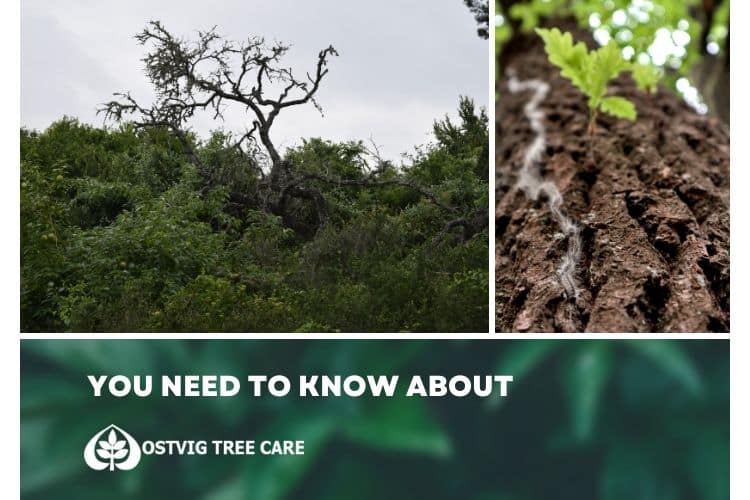
[/vc_column_text][vc_column_text]Dutch Elm Disease (DED), which first hit St. Paul in 1961, is an important tree disease to know about if you live in Minnesota. It is caused by a fungus and is transmitted by the elm bark beetle. These beetles grow and reproduce in elms, eating live and dead tissue of elms. Trees that are infected in the spring experience faster deterioration than those that get the disease later in the year. Infected trees show brown discoloration on the wood beneath the bark. This will be present before the leaves are affected. Leaves will show signs of the disease when they begin to yellow and wilt, eventually turning brown and curling.[/vc_column_text][dt_blog_carousel post_type=”posts” dis_posts_total=”1″ posts_offset=”0″ image_sizing=”proportional” slides_on_wide_desk=”1″ slides_on_desk=”1″ slides_on_lapt=”1″ slides_on_h_tabs=”1″ slides_on_v_tabs=”1″ arrow_bg_width=”36x” arrow_border_width=”0px” r_arrow_icon_paddings=”0px 0px 0px 0px” r_arrow_v_offset=”0px” l_arrow_icon_paddings=”0px 0px 0px 0px” l_arrow_v_offset=”0px” posts=”235″][vc_column_text css=”.vc_custom_1653234345283{padding-top: 50px !important;padding-bottom: 20px !important;}”]
Bur Oak Blight
[/vc_column_text][vc_column_text]Bur Oak Blight (BOB), discovered by Dr. Tom Harrington of Iowa State University, has recently been reported in Ramsey and Hennepin counties. Bur Oak Blight (BOB) is a fungus that affects an Oak’s leaves. Oak trees infected with BOB will have large, brown blemishes on the leaves, as well as brown veins. The result is an overall wilted appearance. In less common cases, there may only be small blemishes on the leaves. During the summer black blisters can form along the veins.[/vc_column_text][dt_blog_carousel post_type=”posts” dis_posts_total=”1″ posts_offset=”0″ image_sizing=”proportional” slides_on_wide_desk=”1″ slides_on_desk=”1″ slides_on_lapt=”1″ slides_on_h_tabs=”1″ slides_on_v_tabs=”1″ arrow_bg_width=”36x” arrow_border_width=”0px” r_arrow_icon_paddings=”0px 0px 0px 0px” r_arrow_v_offset=”0px” l_arrow_icon_paddings=”0px 0px 0px 0px” l_arrow_v_offset=”0px” posts=”2375″][vc_column_text css=”.vc_custom_1653234354525{padding-top: 50px !important;padding-bottom: 20px !important;}”]
Oak Wilt
[/vc_column_text][vc_column_text]Oak Wilt is a caused by a fungus and is very common in Minnesota, particularly in the southeastern part of the state. Tree disease is a concern for all varieties but with the valueAlthough it can severely affect a variety of oaks, particularly red oaks, it is easier to control than Dutch Elm Disease. It is spread through root systems that are grafted, between trees that can be as far as 50 feet from each other. The leaves of red oaks will begin to brown and – you guessed it – wilt, and complete this process two to six weeks. The leaves of white oaks, although the tree is less susceptible to oak wilt, will darken as well, but also have a more evident appearance of brown around the branches (which is harder to spot on an infected red oak).[/vc_column_text][dt_blog_carousel post_type=”posts” dis_posts_total=”1″ posts_offset=”0″ image_sizing=”proportional” slides_on_wide_desk=”1″ slides_on_desk=”1″ slides_on_lapt=”1″ slides_on_h_tabs=”1″ slides_on_v_tabs=”1″ arrow_bg_width=”36x” arrow_border_width=”0px” r_arrow_icon_paddings=”0px 0px 0px 0px” r_arrow_v_offset=”0px” l_arrow_icon_paddings=”0px 0px 0px 0px” l_arrow_v_offset=”0px” posts=”1801″][vc_column_text css=”.vc_custom_1653234406399{padding-top: 50px !important;padding-bottom: 20px !important;}”]
Canker
[/vc_column_text][vc_column_text]Canker comes with a variety of names, such as black rot canker or cytospora, but the symptoms are very widely the same. Typically caused by fungus or bacteria, the disease creates dead tissue on the trunks and branches of trees. As it worsens, wood decay will occur and weaken the tree. Affecting a wide range of trees including pine, oak, willow and dogwood, the canker usually starts with an infected wound and can be worsened by the tree’s environment. Although it can spread slowly, a tree with an infected trunk can die from the disease.[/vc_column_text][vc_column_text css=”.vc_custom_1653234926468{padding-top: 50px !important;}”]
You can learn more about tree diseases and find full articles on specific diseases such as Bur Oak Blight, by reading our blog. If you think your trees might have one of the diseases listed above, contact Ostvig Tree Care today at 952-473-0534.
[/vc_column_text][/vc_column][/vc_row]
Categories

Jim Ostvig
Few people know Minnesota trees like Jim Ostvig. As an ISA Certified Arborist and former owner of Ostvig Tree Care, he has built a career around providing practical, science-based recommendations that put the long-term health of trees first.
Related Posts
Jim Ostvig | August 14, 2026 | Tree Care Tips
Plant Health Care Programs: What’s Included & Why You Should Enroll
Plant health care keeps trees healthy for years. Discover what's included in a PHC program, why they save money compared to removal, and how to get started.
Jim Ostvig | August 14, 2026 | Tree Care Tips
Best Time to Prune Trees in Minnesota (And When to Avoid)
Discover the best seasons for tree pruning in Minnesota. Learn why winter is best for most trees, plus species-specific exceptions and disease risks to avoid.
Jim Ostvig | August 14, 2026 | Tree Pests and Diseases
Oak Wilt Prevention: Minnesota’s Year-Round Seasonal Guide
Worried about oak wilt? Learn when it spreads, how to recognize symptoms, and the best times to prune, treat, and protect Lake Minnetonka oak trees.
Have a Question We Haven't Covered?
Our ISA Certified Arborists are always happy to help. Reach out for a free consultation, or explore more articles in the Learning Center.