
Plant Health Care
Plant Health Care has been defined as the selection, integration and implementation of pest control based on predicted economic, ecological and sociological consequences. Today, perhaps more than ever this approach is relevant to all landscape…

4.7 OUT OF 5 STARS
Trusted by homeowners
across the twin cities
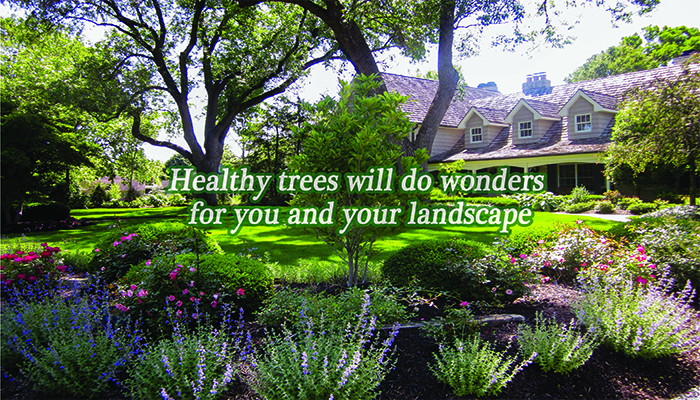
Plant Health Care has been defined as the selection, integration and implementation of pest control based on predicted economic, ecological and sociological consequences. Today, perhaps more than ever this approach is relevant to all landscape pest, nutritional management and care.
Societal concerns about pesticide use, their value to the landscape and the method of application greatly impacts the way we arborists help manage the health and care of any landscape. Unwanted ecological consequences as well as economical occur when the services and products used to address plant health care needs are not offered and used wisely. The cost of materials and labor to eliminate all pests is not justified. A more reasonable management objective is to maintain pest populations below a damaging level. Also, the fundamental principal of PHC is that the entire landscape is a managed unit and should be viewed as an ecosystem.
Abiotic factors such as temperature, rainfall, irrigation, soil structure, nutrients, planting, root zone compaction, drought, pruning needs, air movement and sunlight all impact our ability (or sometimes lack of) to provide our clients with a healthy, safe and beautiful ecosystem we call “our landscape”. Successful PHC programs require an arborist who has the skill set and the passion to service your landscape with the greatest of care and safety.
Several components must be implemented for any PHC service program to be effective. Knowing the key plants within the landscape is one of the first steps to a healthy program. The knowledge of ongoing pest threats, as well as the new ones, in our region is also vital. Monitoring (scouting) is very important because it allows for a regular inspection of the plants to detect damaging insects, diseases, when to fertilize and/or treatment needs.
Monitoring your ecosystem is KEY to insure your surroundings are as healthy as possible. At Ostvig Tree Care, we call our monitoring services “Scout and Treat.” A free visual inspection by one of our professionals is perhaps one of the greatest values and services we can offer our clients when it comes to caring for their trees and shrubs. If we can catch an outbreak or discover a need before it destroys our client’s landscape then we are offering our clients real value. When the threat has been removed or controlled, our clients save time and financial resources that would have otherwise been needed to remove and replace the now dead trees and/or shrubs.
For us in Minnesota pest control is a year round challenge. It starts in the winter with proactive pruning and/or removals as needed. This dormant time work greatly reduces the threat for new pest outbreaks. Then usually sometime around March several damaging insets are awakening from the winter and now begin feeding on your landscape. During the months of April all the way until October, Minnesota is plagued by many types of insects and diseases that if left untreated can and will devastate your trees and shrubs.
One of the final components to a successful PHC service program is an Evaluation Plan. This evaluation allows us to determine, predict, forecast and suggest services that will help keep your landscape healthy the following year. Although these evaluation plans are not an exact science they are currently and still the best method of caring for your trees and shrubs.
The implementation and adoption of PHC services will not be immediately feasible in all situations. However PHC services and products used correctly provides greater value to our clients, safety for our surroundings and a healthier landscape ecosystem for everyone. Want to know more about how we can help you and your landscape ecosystem, contact us today at 952-473-0534 or 651-653-9930.
Categories
Jim Ostvig
Few people know Minnesota trees like Jim Ostvig. As an ISA Certified Arborist and former owner of Ostvig Tree Care, he has built a career around providing practical, science-based recommendations that put the long-term health of trees first.
Related Posts
Jim Ostvig | August 14, 2026 | Tree Care Tips
Plant Health Care Programs: What’s Included & Why You Should Enroll
Plant health care keeps trees healthy for years. Discover what's included in a PHC program, why they save money compared to removal, and how to get started.
Jim Ostvig | August 14, 2026 | Tree Care Tips
Best Time to Prune Trees in Minnesota (And When to Avoid)
Discover the best seasons for tree pruning in Minnesota. Learn why winter is best for most trees, plus species-specific exceptions and disease risks to avoid.
Jim Ostvig | August 14, 2026 | Tree Pests and Diseases
Oak Wilt Prevention: Minnesota’s Year-Round Seasonal Guide
Worried about oak wilt? Learn when it spreads, how to recognize symptoms, and the best times to prune, treat, and protect Lake Minnetonka oak trees.
Have a Question We Haven't Covered?
Our ISA Certified Arborists are always happy to help. Reach out for a free consultation, or explore more articles in the Learning Center.