
Pros and Cons of English Ivy
[vc_row][vc_column][vc_column_text] When you think of English Ivy, you may only have positive words to describe it. Its presence often reminds people of highly respected educational institutions or cottages with old world charm. But its presence…

4.7 OUT OF 5 STARS
Trusted by homeowners
across the twin cities
[vc_row][vc_column][vc_column_text]
When you think of English Ivy, you may only have positive words to describe it. Its presence often reminds people of highly respected educational institutions or cottages with old world charm. But its presence can result in damage – and sometimes death – of its surroundings. You need to understand the threat the vine poses before adding it to your landscape so that you can make the right decision when choosing property and tree care services to minimize or eliminate risk.
[/vc_column_text][vc_row_inner][vc_column_inner width=”1/2″][vc_column_text]
About English Ivy
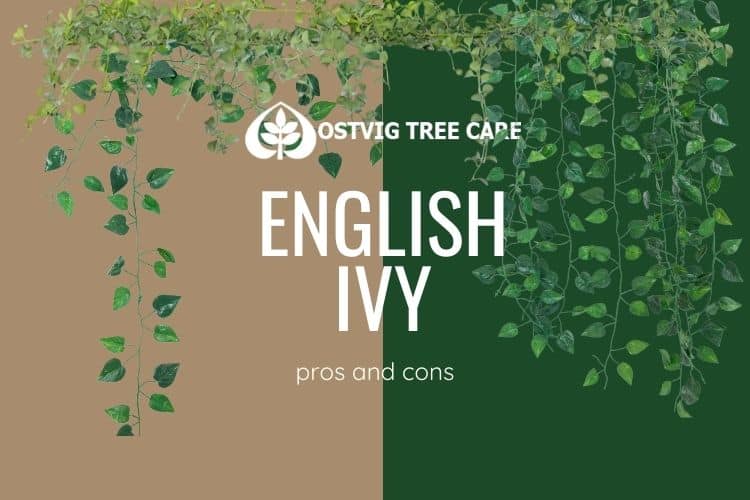
English Ivy is an ornamental evergreen vine that was introduced during North America’s colonial period. The vine is in the Ginseng family and thrives during the summer months. It covers a spread of roughly 20 feet and grows in practically any sunlight, all the way from full sun to full shade. The two stages of English Ivy growth include juvenile and arborescent. During its arborescent stage, it grows to a height of roughly eight inches. This is the time when the vine will begin to become invasive. In fact, English Ivy is on many invasive plant lists in North America. The ivy attaches to trees and buildings, using small rootlets that suction and “glue” themselves to the surface.
If you have spent any time researching English Ivy online, you will see a variety of articles that discuss the advantages and disadvantages of including the plant in your landscape.[/vc_column_text][/vc_column_inner][vc_column_inner width=”1/2″][vc_single_image image=”257″ img_size=”full”][/vc_column_inner][/vc_row_inner][/vc_column][vc_column][vc_column_text]
Pros
- Provides shelter for wildlife (although this might also be seen as a con)
- Practically no maintenance in terms of watering and fertilizing
- Acts as ground cover to areas that have slow or stopped growth
- Ability to grow indoors and outdoors, can be transferred between seasons
Cons
- Slows and stops the growth of native plants
- Prevents sunlight from reaching surround plants because of dense leaf growth
- Makes its way past your siding and roofing
- As a tree company, we have an obligation to point out the cons that directly affect your trees and shrubs.
Tree-Specific Cons
- Weight of the vine on the tree can result in an unbalanced structure, causing the tree to fall during severe weather
- Serves as a bacterial host that infects oak, elm and maple leaves
- Prevents tree from receiving adequate sunlight
- Can negatively affect circulation, smothering the tree
Managing English Ivy
English Ivy should be closely monitored, not just planted and forgotten. To avoid trouble down the road, limit the plant’s growth to the ground. It may have aesthetic benefits but there are no health or safety benefits in letting the vine take over a tree or building. If you are removing the plant from an area, pull or cut vines in the late summer or fall. Make sure you remove the rootlets to the best of your abilities. During disposal, make sure you do not spread the seeds and avoid composting the plant (as this can new growth). You may also want to apply a repeated herbicide routine which can be very effective but dangerous to the plants around the ivy.
You may also want to consider alternative plants. Bearberry, creeping phlox and pachysandra add beauty to your property without being invasive.
Looking to add beauty to your landscape without the risks of English Ivy? Check out our Spring Color Guide.[/vc_column_text][dt_blog_list post_type=”posts” layout=”centered” image_sizing=”proportional” image_scale_animation_on_hover=”quick_scale” post_date=”n” post_category=”n” post_author=”n” post_comments=”n” post_content=”off” read_more_button=”off” posts_offset=”0″ posts=”3997″][/vc_column][/vc_row]
Categories

Jim Ostvig
Few people know Minnesota trees like Jim Ostvig. As an ISA Certified Arborist and former owner of Ostvig Tree Care, he has built a career around providing practical, science-based recommendations that put the long-term health of trees first.
Related Posts
Jim Ostvig | August 14, 2026 | Tree Care Tips
Plant Health Care Programs: What’s Included & Why You Should Enroll
Plant health care keeps trees healthy for years. Discover what's included in a PHC program, why they save money compared to removal, and how to get started.
Jim Ostvig | August 14, 2026 | Tree Care Tips
Best Time to Prune Trees in Minnesota (And When to Avoid)
Discover the best seasons for tree pruning in Minnesota. Learn why winter is best for most trees, plus species-specific exceptions and disease risks to avoid.
Jim Ostvig | August 14, 2026 | Tree Pests and Diseases
Oak Wilt Prevention: Minnesota’s Year-Round Seasonal Guide
Worried about oak wilt? Learn when it spreads, how to recognize symptoms, and the best times to prune, treat, and protect Lake Minnetonka oak trees.
Have a Question We Haven't Covered?
Our ISA Certified Arborists are always happy to help. Reach out for a free consultation, or explore more articles in the Learning Center.